Initiating Sex – Why You Can’t Be the One Who Starts It

Your partner is on the couch beside you, the house is quiet, and somewhere in you there’s a flicker of wanting to reach over and touch them. You notice it, and then something inside you shuts the door. Your chest tightens, your mind jumps to the dishes, and the moment passes like it always does. Later you lie in bed wondering what is wrong with you, because you love this person and you do want them, so why can you never be the one to start it.

We hear this from so many women in our counselling rooms. They can tell us sex is okay once it gets going, sometimes even good. They can say yes, but what they can’t do is go first. Most of them have spent years deciding it means they’re frigid or just not a sexual person.

If you experienced childhood sexual abuse, it’s neither of those things – the parts of you that would need to show up for you to initiate sex, they were the exact parts of you that got hurt.

Wanting sex after sexual trauma feels like a confession

A lot of abusers tell children “you wanted this” or “you liked it”, or some other version that sounds like that. Sometimes a child’s body responded physically during the abuse, that happens because bodies respond to touch automatically, it has nothing to do with wanting or agreeing to anything, but a child doesn’t know that, so she carries it, often in total silence, as proof that it was somehow her fault.

Decades later, when that little flicker of wanting shows up, it can set off the same old fear. “If I want this now, maybe I wanted it then.” Starting sex means owning that you want it, out loud, in front of someone. When your partner starts it, the wanting belongs to them and you get to stay safe. Makes sense, yeah?

That’s why so many women can enjoy sex once it’s happening and still freeze at the very beginning.
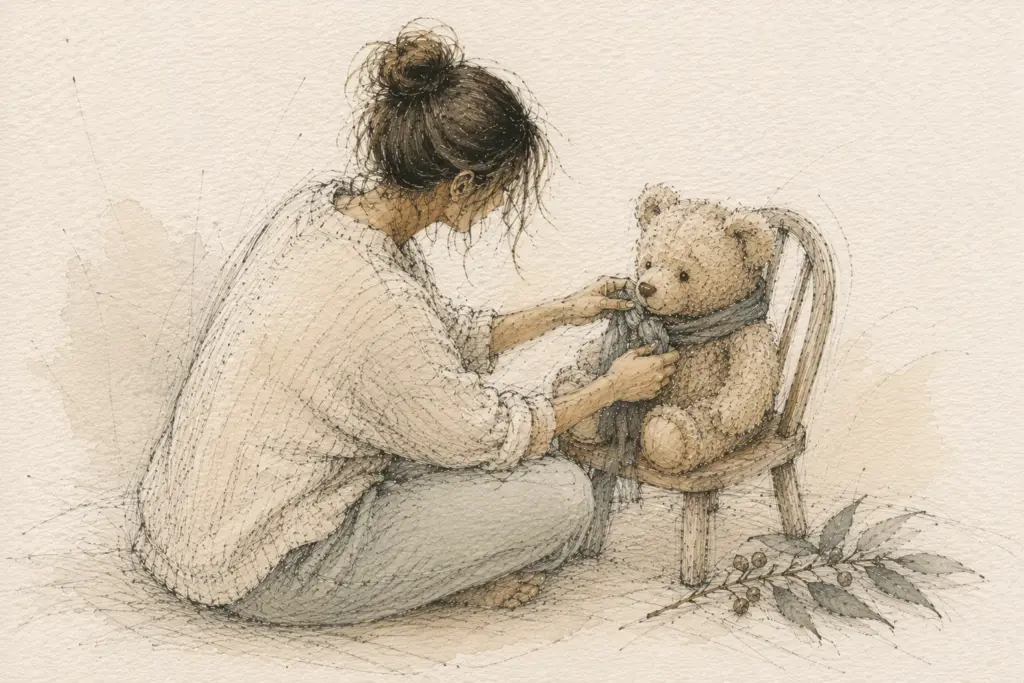
The one who started it was the one who hurt you

When you were small, the person who began sex was the person who took something from you. So being the one who reaches out can feel uncomfortably close to being like them. I hear women say things like “I don’t want to push myself on him” or “it feels a bit predatory to make the first move.” That’s not you being shy, it’s a part of you making very sure you never become the person who did that to you.

Good girls don’t ask for sex

Now add the world you grew up in – Gen X girls were raised on stranger danger while the danger was often at the dinner table. Nobody talked to you about consent or pleasure. The rule was never said out loud but everyone knew it, men start it and good girls wait, and if you wanted sex, that made you a slut.

So the culture and the childhood sexual abuse told you the same thing. Sex is not for you, stay still and let it happen to you. It’s no wonder initiating feels like breaking a rule you never agreed to in the first place.

Waiting for your partner to initiate is the worst thing

A lot of sexual trauma survivors got through the abuse by drifting away from their bodies once it started. That skill often comes along into adult sex. You go a little bit elsewhere and it’s manageable.

Starting sex doesn’t let you do that. It asks you to be right here, in the build up, noticing what you want and moving toward it. For many women the build up was the most frightening part as a child, the knowing it was coming. So of course your body slams the brakes on in that exact spot. Your body goes, nope, seen this movie, not doing it again.

It’s also really hard to act on wanting when you’ve spent years not being able to feel much in your body at all. A lot of women we work with honestly can’t tell whether they want sex or not, the signal is that faint, and all of this? It’s entirely avoidable.

Parts of you are saying no

This is where parts work makes so much sense. There may be a grown woman part of you who genuinely wants to reach for her partner, but she isn’t the only one in there. Protective parts decided long ago that you’ll never be the one to put yourself out there, because waiting is safer. Young parts still experience any adult moving toward sex as dangerous, even when that adult is you. Sometimes a part steps in and you suddenly have a headache or find yourself picking a fight about the bins.

This isn’t about lacking in desire, it’s your system looking after the youngest, most scared parts of you in the only way it knows how.

Asking for it means you could hear no

When the people who were supposed to keep you okay were the ones who hurt you, moving toward closeness sets off alarm bells. Starting sex also means risking a no. For most people “not tonight” is just a scheduling thing. For a survivor it can feel like proof you’re unwanted or dirty. The simplest way to never hear it is to never ask.

What we do to help you ask for what you want

This is not about fixing you, it’s about understanding why this makes so much sense, and then slowly giving you back something that was taken before you knew it was yours.

In EMDR (for childhood sexual trauma) we work with the memories where your body or your wanting was used against you, and with beliefs like “if I want it, it’s my fault.” In parts work we get curious about the parts saying no, what they’re scared of and what they need before they’d let you try. Nobody gets dragged anywhere.

Then we go slowly. Sometimes that starts with you choosing to begin a hug or reach for a hand, something with no sex attached, just so your body learns what it feels like to go first and have it be okay. If you have a partner who’s willing, we can work out a simple signal that lets you invite closeness without it feeling like a big exposed ask, where a no from either of you is fine.

It won’t happen overnight. Some women start to feel their own wanting again long before they’re ready to act on it, and that counts too. What usually shifts first is the story you tell yourself about why you don’t go first, and that changes how you feel in your relationship and what you believe you’re allowed to have.

You were never meant to be the one who waits forever. That’s something we can work on together, at whatever pace your system can manage.

Send this to yourself for a day you wonder what’s wrong with you OR you can reach out for us to have a chat and see if this is something you would like to work on.

If this brings things up for you, the Blue Knot Helpline is 1300 657 380, or Lifeline on 13 11 14.


Women struggle to initiate sex. Men struggle to stop watching porn. What if we were all just set up?

Sex is a topic that, for many of us, brings up some discomfort and vulnerability. When difficulties with sex happen in our relationships, we’re often left feeling like the problem is personal, rather than recognising the bigger forces at play.

If you’ve ever felt like something was fundamentally wrong with you because of how you relate to sex and intimacy, you’re not alone. Maybe you freeze when it comes to initiating sex, even though you want connection. Maybe you keep turning to porn, even though it’s affecting your intimacy. These aren’t personal failings. They’re patterns – patterns that were set up long before you had the chance to choose otherwise.

The messages we learn about sex

Let’s talk about conditioning. Those assigned female at birth tend to be taught from an early age to be desirable but not desiring. We’re told to be sexy but not ‘too much’, to please but not to ask for what we want. Sexual agency? That was never part of the script. So, when it comes to initiating, many women freeze – not because they don’t want sex, but because their nervous system equates their female desire with danger, rejection, shame, or confusion.

Males, on the other hand, are often conditioned from a young age to be in control, always ‘on,’ and to see emotional vulnerability as weakness. Many boys don’t get real conversations about intimacy, just a flood of unrealistic depictions in porn. So they turn to it, for pleasure, for comfort, stress relief, or even a sense of safety. 

And then they’re shamed for it, told they should ‘just stop’ without ever being given the tools to actually do so.

Neither of these struggles are random. They’re trauma responses.

Trauma responses in disguise

Freezing instead of initiating? That’s a nervous system response. If past experiences taught your body that expressing desire isn’t safe, you’ll shut down before you even realise what’s happening. Learn more about the freeze state and sexual trauma.

Compulsively turning to porn? That’s another nervous system response. When stress, shame, or loneliness build up, your body reaches for the fastest way to regulate. And for many men, porn has been wired in as the easiest (although temporary) escape.

As you read this, I want you to know that this isn’t about pointing fingers or placing blame. It’s about recognising that these struggles with intimacy don’t stem from ‘not trying hard enough’. They stem from the ways we’ve been set up by culture, conditioning, and our automatic nervous system survival strategies.

So, what now? How do we have better sex lives?

If this resonates, the answer to more connected sex lives and relationships isn’t shame. The answer comes from being curious about our sexual conditioning. 

What if, instead of beating yourself up for not initiating, you got curious about what your body is trying to protect you from? What if healing isn’t about forcing yourself to stop turning to porn, but first understanding where the pattern came from and what need it is meeting?

Some questions to ask yourself include:

Where did I learn this? 

What beliefs am I carrying that aren’t really mine? 

What does safety feel like for me?

This is where real change happens, not through self-judgement, but through recognising that these patterns make sense. And once they make sense, they can shift.

Because intimacy (real, connected, deeply desired intimacy) was never supposed to be about performance. It’s really about presence, safety, and reclaiming what was always yours.

Here are some ways to start moving toward a sex life that feels more connected, less pressured, and truly yours…

Having an enjoyable sex life explore with sex and trauma counsellor kellie sheldon

Notice the barriers to sex, without judgement

Instead of blaming yourself for feeling stuck, start by noticing what’s coming up. Do you feel disconnected? Pressured? Do you shut down or avoid intimacy altogether? Bringing gentle awareness to these patterns (without forcing yourself to ‘fix’ them) is the first step in shifting them.

Get to know your nervous system

Your body plays a huge role in intimacy. If you’re feeling anxious or frozen, try grounding yourself in the present moment. Press your feet into the floor, take slow breaths, or focus on a comforting touch (like holding your own hand or noticing the feeling of a soft blanket). These actions can help signal to your nervous system that you’re safe.

Unpack what desire and connection mean to you

If you’ve been taught that desire should always be spontaneous or that sex has to happen a certain way, it might be time to question those beliefs. What if intimacy could be more about exploration and less about expectation? 

Sex therapy can help shift deeply held patterns and beliefs about sex

Having the space to explore these patterns with someone who gets it, without judgement, without pressure) can help us to unpack and learn more about our relationship with sex and intimacy. 

These struggles aren’t just about the mind, they’re stored in the body, shaped by past experiences, and reinforced by cultural messaging. 

Working with a sex and trauma therapist who understands intimacy, trauma, and the nervous system can help you move from frustration to connection. 

Whether it’s through exploring underlying beliefs, somatic work, or therapies like EMDR, counselling can offer the space to unlearn what isn’t serving you and rebuild intimacy in a way that feels safe and fulfilling.

Because at the end of the day, intimacy isn’t about checking a box, it’s about feeling fully present in your own experience, on your own terms.

Hi, I’m Kellie, the principal therapist here at our practice. We specialise in helping people make sense of what they’re feeling – especially when those feelings don’t quite add up or feel too heavy to carry alone. Our approach is grounded, trauma-informed, and a little different to your standard talk therapy. Whether you’re untangling old relationship patterns, exploring sexual concerns, or trying to understand emotions that seem too big or shut down – we’re here to walk with you through it. At the heart of what we do is this: helping you feel less stuck, more understood, and gently hopeful about what’s possible next.

You’re not alone in this – and you don’t have to figure it all out by yourself anymore.

If you’re ready to explore this with support, I offer trauma and sex therapy online Australia-wide and in-person in Midland, Perth, WA. 

Book An Appointment

Functional Freeze and Sexual Trauma

Functional Freeze and Sexual Trauma

Imagine standing on a path you want to walk so badly, but every time you try to step forward, you just… can’t. You know where you want to go, but it feels like something inside you freezes up, leaving you stuck. This experience, called “functional freeze,” is actually a survival response. And when it shows up in your sex life, it can make intimacy feel out of reach, even if you really want that closeness.

We’re going to break down what functional freeze is, why it’s so common for people who’ve experienced sexual trauma, and how it can be a confusing and frustrating barrier to intimacy. We’ll talk about why this freeze response doesn’t mean there’s anything wrong with you, and we’ll walk through some steps that can help you start to feel more at ease with yourself and with your partner.

What is functional freeze?

To get a sense of functional freeze, picture a deer caught in headlights. When something terrifying happens, like a car suddenly appearing, the deer freezes to survive. Humans do something similar when we face overwhelming situations, especially if we feel like we can’t fight or run away.

Functional freeze isn’t usually a total paralysis, though. It’s often more subtle. You might feel like you’re going through the motions but not fully “there,” like you’re on autopilot or stuck in a fog. This state can be tough to notice, and it’s even harder to recognise if you don’t know what to look for. For survivors of sexual trauma, this freeze response can become a default setting—something that kicks in without warning, even years after the trauma.

Why does this happen with sexual trauma?

The freeze response is a smart, protective reaction. When someone experiences sexual trauma, they’re often in a situation where they feel trapped or powerless, and freezing becomes the safest option. The body might tense up and shut down as a way to cope with the overwhelming experience.

The challenge is that the body remembers. This response doesn’t disappear once the trauma is over; it sticks around, showing up in ways that can make intimacy feel scary, even in safe situations. So, during intimate moments, that same freeze response can be triggered all over again.

When the freeze response kicked in..

Meet Emily. In her early thirties, smart and successful, with a loving partner and friends, Emily seemed to have it all. But in her relationship, she felt a growing disconnect. She wanted to be close to her partner, but every time they got intimate, it was like an invisible wall went up. She’d go through the motions, but a part of her wasn’t present.

At first, Emily thought something was wrong with her, and she tried to push through it, hoping to “fix” herself. But the harder she pushed, the worse it got. Then, one day, her partner gently asked, “Are you really here with me?” And that’s when she realised – she wasn’t. Some part of her was miles away, shut down in a way she didn’t fully understand.

Emily’s body was protecting her, even if she didn’t know why. This was her functional freeze – a reaction her body had learned during a time when she’d felt powerless. Now, it was still showing up, keeping her safe from intimacy that her body saw as risky.

The science behind the freeze response.

Our nervous systems are built to protect us. When we go through trauma, the brain stores that experience as a memory that lives in both the mind and body. This memory isn’t passive – it’s connected to our nervous system, ready to react if we encounter anything that feels remotely similar to the trauma.

For people who’ve been through sexual trauma, intimate moments can trigger that same survival response. The body and brain recognise certain elements – closeness, touch, vulnerability – and before you even realise it, the “freeze” button gets pressed.

It’s also important to know that functional freeze isn’t just in your head. It can show up in your body, too, with symptoms like muscle tension, shallow breathing, or even numbness.

Why you’re not broken

One of the hardest parts of dealing with functional freeze is the self-blame that often comes with it. It’s easy to think, Why can’t I just relax? What’s wrong with me?

Reality is nothing is broken. Your body and mind are just doing what they’ve learned to do. Freezing helped you survive, and now your body is trying to keep you safe the same way.

This response isn’t about “getting over” the past. It’s about understanding that the past is still part of you and that your body learned something essential about safety. Your body’s main goal? Keeping you alive and safe.

Steps to thaw the freeze

If functional freeze feels like a constant presence, know that there are ways to start shifting out of it. It’s a slow, gentle process that takes time, but here are some steps that might help you begin:

Notice the Freeze Without Judgment

The first step is to recognise when the freeze response shows up. Instead of getting frustrated or forcing yourself to “snap out of it,” try just observing. Is there tension in your body? Do you feel numb? Are you zoning out? Bringing awareness to these signs can help you recognise when your body is entering freeze mode.

Ground Yourself

When you notice the freeze, grounding techniques can help bring you back. Try pressing your feet into the ground, squeezing something in your hands, or focusing on an object in the room. This can help remind your body that you’re safe right now, in the present moment.

Connect with the Parts of You That Are Protecting You

In therapy, especially in “parts” work, there’s a focus on different parts of ourselves. You might have a protector part that triggers the freeze response when things feel too close for comfort. Recognising this part can help you see that it’s not trying to sabotage intimacy – it’s just trying to keep you safe.

Imagine this part as a friend who steps in when you’re vulnerable. Instead of pushing it away, you might say, “Thank you for protecting me, but I want to try something different.” This can be a powerful way to understand the freeze response instead of battling it.

Try Small Steps Towards Safety

Moving out of freeze takes time, and that’s okay. If intimacy feels too big to handle, start with smaller actions that build a sense of connection and safety. This could be as simple as sitting together without any pressure or focusing on non-sexual touch. Let your body relearn that it’s okay to experience closeness without needing to freeze.

Therapy Can Be A Game Changer

Therapies like Eye Movement Desensitisation and Reprocessing (EMDR <– click to read more) and somatic therapy can make a big difference. These approaches help process trauma and teach your body that it’s safe in the present moment. EMDR works to reduce the power of traumatic memories, while somatic therapy connects mind and body to build a new sense of safety. Working with a trauma-informed therapist can be incredibly helpful.

You’re not alone in this

If you’re feeling stuck in functional freeze, remember: you’re not alone. Many people are walking this same path. Healing doesn’t happen in a straight line – it’s more like a winding road, and it’s perfectly okay to go at your own pace.

Intimacy after trauma is one of the toughest challenges, but with patience, understanding, and support, it’s possible to find a way through. You’re not broken, and you’re not failing. You’re just learning how to feel safe again.

Why Trauma Makes It Hard to Say No?

It’s hard to say no, especially when it comes to intimate relationships. If you’ve gone through trauma, you may feel like you’re always saying yes, even when you want to say no. Trauma can make setting boundaries feel impossible. But it doesn’t have to stay this way.

Let’s talk about why trauma makes it hard to say no, the impact it has on your relationships, and how to start reclaiming your boundaries.

Why Does Trauma Make It Hard to Say No?

Trauma changes how your brain reacts to threats. If you’ve experienced sexual trauma or abuse, your brain might have learned to freeze when you feel unsafe. This is your body’s way of protecting you. During trauma, freezing is a survival mechanism. But this survival response can stay with you long after the trauma ends.

You might notice this reaction when you’re in situations that remind you of your trauma. You freeze, you say yes, even though every part of you is screaming no. This is normal. It’s your brain trying to keep you safe, but in the wrong way.

Guilt, Fear, and the Need to Please

Many people with trauma also struggle with feelings of guilt or fear. You might feel like you owe someone your time, attention, or even your body. Guilt can make it seem like saying no will hurt someone, or make them stop loving you. This feeling is rooted in trauma and past experiences where your needs were ignored.

Saying yes when you don’t want to can come from a deep desire to please others. Trauma survivors often have a hard time separating their own needs from the needs of others. This is especially true if your trauma involved a violation of your boundaries.

The Impact on Your Relationships

Saying yes when you really want to say no can wear you down over time. It can create feelings of resentment, exhaustion, and emotional distance in relationships. The more you push aside your own needs, the more disconnected you may feel—not just from your partner, but from yourself.

This emotional distance can also make intimacy harder. If you’re constantly giving in without considering your own desires, it can feel like you’re going through the motions instead of being present. Over time, this can harm your relationships, creating an imbalance where your needs are overlooked.

How Therapy Can Help You Reclaim Your Boundaries

Smaller

One of the most effective ways to start setting boundaries again is through trauma-informed therapy. Therapies such as EMDR (Eye Movement Desensitisation and Reprocessing) and parts work can be particularly helpful for survivors of trauma.


• EMDR helps you reprocess traumatic memories in a way that allows your brain to recognise that the danger has passed. This can help reduce the freeze response and make it easier for you to assert yourself when needed.


• Parts work allows you to explore the different parts of yourself that might still be holding onto fear, guilt, or the need to please others. By working through these parts, you can begin to restore balance and give each part of yourself the space to be heard.

Practical Steps to Start Reclaiming Your Boundaries

While therapy is a powerful tool, there are also small, practical steps you can begin taking today to reclaim your boundaries.

1. Listen to Your Body

Your body often knows when something feels off before your mind catches up. Pay attention to physical sensations like a tight chest, a knot in your stomach, or a sense of unease. These are signals from your body that something isn’t right.

2. Start with Small Nos

You don’t have to start with big boundary-setting right away. Practice saying no in small, low-pressure situations. For example, turn down a social event you don’t want to attend or say no to a request that feels unnecessary. This helps build your confidence.

3. Use Clear, Direct Language

When setting boundaries, focus on using “I” statements, like “I feel uncomfortable,” or “I need some space.” This keeps the focus on your own experience rather than accusing or blaming others, which can help reduce conflict.

4. Give Yourself Permission to Pause

If you’re unsure how to respond in a moment, it’s okay to pause. Say something like, “I need to think about that” or “Can we talk about this later?” This buys you time to check in with your feelings and figure out what you really want.

5. Build a Support System

Healing from trauma is a process, and you don’t have to do it alone. Surround yourself with people who respect your boundaries and are willing to support your healing process. Whether it’s a trusted friend, a therapist, or a support group, having a safe space to turn to can help you practice setting boundaries in real life.

Moving Forward

Reclaiming your boundaries after trauma isn’t easy, but it’s essential for your well-being. Start with small steps, listen to your body, and seek support where needed. Healing doesn’t mean always getting it right—it means learning, growing, and giving yourself the space to feel in control again.

If you’re finding it hard to set boundaries or struggling with feelings of guilt and fear, reaching out to a trauma-informed therapist could be the next step. They can help you navigate your healing process and empower you to reclaim your boundaries, bit by bit.

Let me know if you’d like to book a session or learn more about trauma-informed therapies like EMDR or parts work. You don’t have to go through this alone.

Overcoming Sexual Shame

Sex is a natural part of life, yet many people struggle with sexual shame. This can come from cultural beliefs, growing up with certain religious beliefs, family stories, trauma, or personal experiences. Understanding the roots of this shame and how to overcome it is essential for developing a healthy and positive relationship with your sexuality.

Sexual shame is often learned through our upbringing or messages from society. Some common sources include:

Some religious teachings suggest that sex is only appropriate within certain boundaries, like marriage, which can create guilt for those who deviate from these expectations. Schools these days will teach abstinence over pleasure. Thinking this way takes away the power of what pleasure is about, whilst adding shame to enjoying, let alone having sex.

Negative experiences, such as past trauma or being shamed for natural sexual exploration, can contribute to long-lasting sexual shame.

The Impact of Sexual Shame

Sexual shame can have far-reaching effects on mental health and relationships:

Feeling ashamed of one’s sexuality can lead to low self-worth and negative self-perception.

Shame can create barriers to intimacy and open communication in relationships, leading to dissatisfaction or disconnect.

The emotional burden of shame can contribute to anxiety, depression, and other mental health issues.

How to Overcome Sexual Shame

Overcoming sexual shame requires effort and self-compassion. Here are some steps to guide you:

Understanding that sexuality is a normal, healthy part of being human is crucial. Seek out sex-positive education resources that challenge shame-based beliefs.

Reflect on where your feelings of shame come from and actively work to replace these with positive, affirming beliefs about your sexuality.

Consider talking to a therapist or joining a support group to address and work through feelings of shame. Professional guidance can be invaluable in this process. Therapies such as EMDR or parts work can help.

Be kind to yourself. Recognise that overcoming shame is a journey, and it’s okay to take time to heal and grow.

By addressing and challenging the sources of sexual shame, you can begin to develop a more positive and healthy relationship with your sexuality. Remember, sexuality is a natural and important part of life, and embracing it without shame can lead to greater well-being and happiness.

I am here to help and work with you when you are ready to live a life full of sexual pleasure – without shame.

Honoured as one of Perth’s Best & New Role at Brainz Magazine!

I’ve got some fantastic news to share with you all, and I couldn’t be more excited! It’s been a whirlwind of amazing opportunities lately, and I wanted to take a moment to celebrate and share these milestones with you.

First off, I’ve been invited to be a contributor and expert writer for Brainz Magazine! This is such an incredible honour, and I’m thrilled to join a community of thought leaders and experts from around the globe. I’ll be sharing insights on trauma and sex therapy, aiming to educate, inspire, and provide support through my articles. Stay tuned for my upcoming pieces – I can’t wait to hear what you think!

I’m absolutely chuffed to announce that I’ve been included on the Up and Coming List by ‘Best in Perth’ as one of the top 5 psychotherapists in Perth. This recognition means the world to me. It’s a testament to the hard work and dedication I’ve poured into my practice and my passion for helping others. Thank you to everyone who’s been part of this journey – your support is invaluable.

As if that wasn’t enough, I recently had the pleasure of chatting with David on the Unique Professions Podcast. We had a fantastic conversation about my work, the unique aspects of trauma and sex therapy, and my approach to healing. David was an excellent host, and I thoroughly enjoyed sharing my story and insights with his listeners. If you haven’t had a chance to listen yet, I highly recommend checking it out – it’s a great listen! I look forward to working with David again soon.

I’m excited to share that Anna Thellmann – Intimacy Expert will be holding an online workshop called “ReConnect With Your Partner”. I’ve been invited to speak on this limited-access, on-demand audio workshop, which launches on 11th September and will be available until 11th October. The workshop is free for all and will cover topics like the main reasons for partner disconnect, daily life impacts, underlying fears and beliefs, and practical steps for reconnecting. As soon as it launches I’ll be sharing the link!

What This Means for Us

These opportunities are not just personal wins; they’re a reflection of our collective journey. Each step forward is fueled by the incredible stories and resilience of my clients, the support of my peers, and the curiosity of everyone who engages with my work. I’m excited about what’s to come and how these platforms will allow us to reach and help even more people.

Thank you for being part of this amazing journey. Your support and trust mean everything to me, and I’m looking forward to sharing more exciting updates and insights with you all.

Breaking the Silence: Navigating the Truths and Myths of Rape

Rape is a form of sexual harm, sometimes also called sexual assault or sexual violence. Sexual harm is the ‘umbrella’ term which includes any unwanted sexual contact or behaviours including:

  • rape (including attempted rape)
  • penetration (vaginal, anal or oral) with a body part or an object
  • touching
  • kissing
  • other sexual practices or behaviours

Rape can be a one-off event or it may have happened lots of times. It can involve one or more people. Often, but not always, sexual harm involves fear, force, or coercion such as using threats to make someone do something. People who are raped often know the perpetrator. Is it very common for rape to happen at, or near the raped person’s home.

Myths about rape

Myth: They were asking for it

The victim doesn’t have to say ‘no’ for it to be rape or sexual harm. Often people can go into a freeze response when they are overwhelmed or feeling unsafe. This means that they may not be able to move, speak or even think clearly. Any sexual activity that doesn’t have a clear and enthusiastic ‘yes’ from both/all parties should be taken as a ‘no’.

Unwanted or forced sex can happen between partners or spouses. It is not a partner’s “duty” to have sex with their partner against their will. In heterosexual marriages, up to 14% of wives report having unwanted sex with their husbands. This is known as marital rape and it often happens repeatedly throughout a relationship. This may surprise you, but waking up to your partner having intercourse with you is classed as rape. In Australia, it is illegal to have unwanted or forced sex with your partner or spouse.

But remember, regardless of the circumstances, what happened to you is never your fault. Even though it can be incredibly challenging and normal not to blame yourself, please know that you did nothing wrong. It doesn’t matter what you said or did, how you behaved, what you wore, or any other factor, it’s not your fault!

The responsibility lies solely with the perpetrator, not with you. Your experience is your experience, and your feelings are understandable and normal. You deserve compassion, support, and understanding as you work through this. 

There can be many physical, mental, and emotional consequences that come in the hours, days, weeks, and even years after rape.  Soon after the event, you may need to attend a hospital or see a doctor for help with any injuries such as broken bones, skin tears, or bruises. You may also seek help from a sexual health specialist to prevent unwanted pregnancy or sexually transmitted diseases.

Emotional support is also available from counsellors and therapists to help with trauma, shock, anxiety, fear, depression, intimacy issues, and other difficulties. You may experience PTSD type symptoms such as flashbacks, dreams, or fight/freeze states.

Seeking help and support from professionals who specialise in trauma recovery is okay. We can use Eye Movement Desensitisation and Reprocessing (EMDR), we know it helps people process and heal from traumatic experiences like rape. Therapy can provide a safe space to explore your emotions, work through trauma-related symptoms, and develop coping strategies for healing and moving forward. 

If you can, reach out for support. Australia’s national sexual assault helpline 1800 656 4673.  Asking for help is nothing to be ashamed of. If someone you know has been raped, ask them if you can reach out for help on their behalf if they cannot. Don’t assume that they want help – always ask first and respect their decision. Sometimes just being there is the best thing you can do for a friend who has just experienced trauma.

Know that you are not alone in this, and your life does not have to be dictated by what happened to you.

The Heart of the Matter: Understanding the Body’s Memory Bank

Isn’t it fascinating how our bodies seem to carry the echoes of our past experiences? They’re like silent witnesses to every moment, storing away memories and emotions in the nooks and crannies of our muscles and bones. But have you ever wondered why our bodies have this remarkable ability? What purpose does it serve, and how does it shape the way we navigate the world around us?

To understand why our bodies hold onto our experiences so tightly, we need to look at the role of our nervous system. From the moment we’re born, our bodies are wired to respond to the world around us, constantly scanning for threats and opportunities. When we encounter something new or unexpected, our nervous system springs into action, sending signals to various parts of our body to prepare for whatever comes next. This is known as the fight-or-flight response, and it’s a fundamental survival mechanism that has helped humans navigate dangerous situations for thousands of years.

But our bodies aren’t just wired to respond to external threats; they’re also finely attuned to our internal world of thoughts and emotions. When we experience something that triggers a strong emotional response, whether it’s a moment of joy, sadness, fear, or anger, our bodies react in kind. Our heart rate may increase, our muscles may tense up, and our breathing may become shallow. These physical changes are not just random; they’re our body’s way of preparing us to cope with the emotional intensity of the moment.

But the purpose of our body’s ability to hold onto our experiences goes beyond mere survival. It’s also a key part of how we make sense of the world and our place in it. Our bodies serve as a kind of living record of our lives, carrying with them the stories of who we are and where we’ve been. When we encounter a familiar song or smell, it’s like flipping through the pages of a scrapbook, reliving those moments all over again. And while this can sometimes be painful, it can also be incredibly healing, allowing us to revisit past traumas and come to terms with them in a new light.

n the end, our bodies are more than just flesh and bone; they’re vessels of memory, emotion, and experience. They have a way of weaving the threads of our past into the fabric of our present, shaping the way we see ourselves and the world around us. And while it can be tempting to try to escape the weight of our past, perhaps the real challenge is learning to embrace it—to acknowledge the stories our bodies hold and to recognise the strength and resilience they represent. So the next time you find yourself caught up in a wave of emotion or memory, take a moment to honor the wisdom of your body. It may just have a story to tell you.

Your body doesn’t lie – covert sexual trauma

Take your time reading this. It might be too difficult for you; I understand that. We do need to talk about it, though. We cannot keep denying what is or isn’t sexual trauma just because we do not have a memory of it.

Somatically your body remembers everything. Memories of good and bad will sit in your nervous system until it needs to speak to you, or wants your attention. This happens even if you have no memories of the events. As the book title suggests “The body keeps score”.

Covert sexual trauma is rarely spoken about. These are the events that you debate with friends over for if what happened to you was sexual assault or not. I have read many posts in women’s Facebook groups asking precisely – “was what happened to me assault? Can I do anything about this?” The answers are often a mixed bag of reactions from “yes, it was” to “no, it wasn’t, and you could’ve done something to prevent it”. The victim blaming that occurs in those groups at times is beyond imaginable. I am positive it happens in the men’s groups as well. That’s if a male is game enough to post such a scenario with the same question.

What is covert sexual trauma?

Unlike overt sexual trauma, covert is behaviours, comments, or looks which are not wanted. It’s the coercion to make you do something to get the person to lay off you or the image you were sent that you did not request. Covert sexual trauma can be tricky, I understand that. Think of it this way – if you feel uncomfortable about it, it is.

Overt sexual assault is outright violent behaviour. No one questions overt; it’s clear and undeniable.

As a society, we do not classify unwanted sex by partners as sexual trauma. However, if you are being talked into or you give in to make them stop, that is covert sexual assault. I understand there are often unspoken rules that occur within relationships. That is okay if they are negotiated and spoken about beforehand.

Other examples of covert sexual trauma include:

  • unwanted photographic nudes
  • unwanted touching
  • breaching of privacy around intimacy
  • removal of sex toys from your room or possession without permission
  • body shaming
  • slut shaming
  • verbal sexual words or sounds
  • being introduced to pornography at a young age
  • sharing of your images without permission
  • reactions from partners during sex that left you feeling uncomfortable
  • sexting without permission

Quite often, covert sexual trauma occurs in childhood. The term used here is ’emotional incest’. It is described as the parent rely’s on the child to fill their emotional needs. I am talking about extreme emotional reliance. Imagine a child replacing a partner or best friend regarding emotional support. The child’s needs are ignored. In effect, the child has become the parent.

Some parents may extend their behaviours to being sexual in nature. They will take their children on dates and talk about their sexual needs and adventures with them. It’s important to note here, this then falls out of emotional and into physical abuse.

Parents do not often see an issue in how they interact with their children. They fail to see how the crossing of boundaries is harming their child. There are many reasons why the lines are crossed. The parent may have experienced the same behaviours growing up, and they are seen as ‘normal’, lacking in parenting skills for what is appropriate and what isn’t, or they may be struggling with a mental illness or addiction. Single-parent families are at a higher risk, or if the partners in the marriage/partnership are unhappy.

Signs of covert sexual trauma

Often the symptoms or signs of covert trauma are unnoticed or not understood. You may find yourself doing one of the following unconsciously:

  • Struggling with arousal – you want to be aroused, yet struggle to get or stay aroused.
  • Pain during penetration – your body is speaking to you. Our emotional states are often felt as pain, covert sexual trauma may be stored in your nervous system and are released as a painful experience during penetrative sex.
  • Flashbacks – a particular touch, sound, or smell may produce a memory or flashback of an event.
  • Avoidance – you may find yourself avoiding any sexual advances, touch, or relationship.
  • Relationship issues and difficulties – it is not uncommon to distrust others or yourself. You may struggle with communication and vulnerability.
  • Hypervigilance – you may find yourself always looking for danger or feeling unsafe.
  • Self-blame – it is not unusual to blame yourself for what happened. It is common for women to go along with a sexual event as they need to protect themselves. You may experience shame, guilt, and low self-esteem.
  • Difficulty with emotions – you may find yourself wondering why your emotions seem a little out of control or intense. It is common to struggle with anger, sadness, or fear and have little understanding to why you feel this way.

Even though the list is fairly extensive, you may or may not experience any of them, as everyone is different. Some people have no signs or symptoms, others have many, and some show up months or years later. There is no hard and fast rule for how you will feel or cope after your experience.

How to heal

You recognise something is holding you back, or the symptoms you are experiencing are affecting your life. You want to heal. But how?

Firstly, recognising and acknowledging your experience is important. Give yourself compassion. Remind yourself it wasn’t your fault.

Self-care is important. Be kind to your body, heart and soul. Have long showers or baths, rest a lot, and read. Do the things you enjoy doing and what makes you feel good. Spend time with friends and family.

Find a support group. You may like to stay online, and that is okay. You may wish to have live human connection, which is okay too. Whatever feels right at this time. Finding yourself a community that understands what you are saying and feeling can help normalise how you feel. Not feeling alone is important.

Speak to a professional. Talk therapy can help you understand how and why you feel the way you do. You may be questioning yourself, and talking to a therapist can help clarify things for you. You do NOT need to go into full details about what happened if you do not wish to.

EMDR (eye movement desensitisation and reprocessing) can help you move forward. Often, with sexual trauma, survivors blame themself or don’t feel safe anymore. EMDR can help remove those beliefs and the emotional reactions that come with flashbacks or intrusive thoughts.

The important thing to remember is you are not alone. There is help and support out there for you. You do not have to go through this by yourself. It is time we stopped feeling ashamed of covert sexual traumas and start to share the stories we hold so close. The #metoo movement started the ball rolling, it’s up to you and I to keep it going.

If you or someone you know has experienced unwanted sexual behaviours, know that help is available. As a therapist, I am here to support you on your healing journey. Whether you need someone to listen, provide guidance, or help you navigate the legal and medical systems, I am here for you. Don’t suffer in silence. Reach out to me today to learn more about how therapy can help you move forward and reclaim your life. Let’s work together towards healing and recovery.

5 Myths of female sexuality

So. Much. Pressure.

Turn the tv on, open a book, and tune into some porn. It’s everywhere. There is something wrong with you if you do not have sex 20 times a month, or have the biggest mind-blowing orgasm after 3 pumps whilst being held against a wall.

Reality? Throw all those misconceptions out the window and relax.

If you are not wet, you don’t want sex

Some women experience dryness during sex, and that is completely normal. Dryness can occur at different times and for different reasons. Medication, stress, hormones, pregnancy, dehydration (good excuse to drink more water), and menopause are just a few reasons you may be experiencing a bout of dryness. Grab yourself some good water-based lubricant, and don’t forget to slap some on your partner (or toy) to help create extra fun, slippery friction.

You need to be turned on to have sex

Wanting sex is not always available on tap. Sometimes you may be struggling to find any desire, and other times you feel as though you cannot get enough. You are normal! There are two schools of thought around desire. One includes you needing to be turned on first to want sex, the other states you can become turned on by touch and then want sex. There is a reason foreplay is important, and this is it. Next time you feel like turning your partner down, take a breath and, dive in, see what happens. You might be surprised.

You have a low sex drive (desire), and cannot help it

What if I told you, you CAN change how often you would like sex? Would that change your life? Here are the facts; you can change it. Let’s look at why you have a low desire to begin with. Are you on medication? Is your life full of stress? Are you able to switch your mind off? Do you have a good work-life balance? Are you sleeping enough and eating the right foods? Are you expecting to be turned on all the time? Is sex painful, or does it feel like a chore?

Any of these things and more can reduce your sexual desire or drive. We all know logically if we are tired, the last thing we want to do is bumping uglies till all hours. If our brains are flooded with the stress hormone cortisol, there is a slim chance you could get in the mood. Your body most likely will shut down to any and all pleasure. This is why having a balance is imperative for taking time to look after yourself and your sex life.

If you don’t have an orgasm from penetration, you’re broken

Thanks to movies, we are led to believe orgasms come quickly, fast, easily, and ALWAYS during intercourse. Ask the majority of women, and they will tell you otherwise. Ask your girlfriends. The reality is 75% of women will not achieve the wholy grail by penetration alone. Do yourself a favour, stop believing the movies and comparing yourself to them.

There are only 2 types of orgasms

Just like men, women can have multiple different types of orgasms. You will be asking your partner to lift their game or lifting your single romps up to achieve all of these.

VaginalVaginal walls are pulsing and may produce female ejaculation, usually created by g-spot stimulation.
AnalFelt in the anal canal and sphincter, not in the vagina.
Clitorial Often felt on the body itself, like a tingle.
ConvulsingYou will feel these in your pelvic floor area; try edging (long build-up) for one of these!
ErogenousThose areas that we take for granted or are often ignored. I’m talking nipples, ears, neck, knees, and elbows.
ComboAny of the above can occur simultaneously; if you have one of these, your whole body is most likely feeling it.

Now that we have a better understanding of the myths and misconceptions surrounding female sexuality, it’s time to take action. You can make a difference by educating yourself and others about the reality of women’s sexual experiences. We can have open and honest conversations with our partners and loved ones, promote healthy attitudes towards sex, and challenge the harmful stereotypes that still exist.

Sex is meant to be fun. There are many more myths and lies about female sexuality. These five just scratch the surface. As a woman, I am sure you have heard them all. I would love to know your favourites. Let’s take action together. Let’s work towards a world where women are empowered to explore and enjoy their sexuality without fear or shame. Let’s challenge the myths and misconceptions that hold us back and create a more inclusive and sex-positive society for everyone.